Book Appointment Now

Proven Ways to Build Credit Score Without Loans in Africa
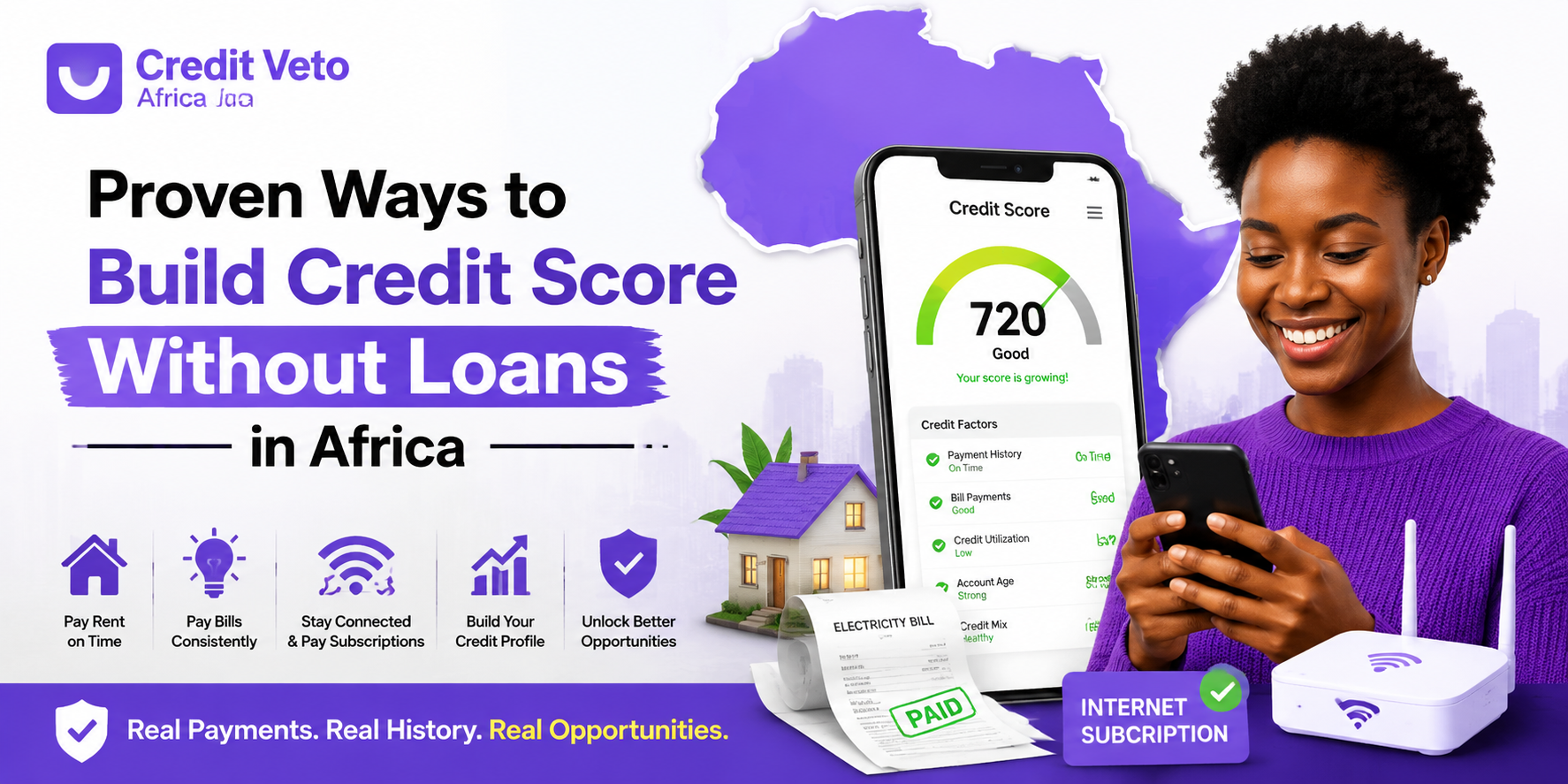
You can pay your rent on time, settle your electricity bill every month, buy data, pay for internet, and still have no real credit score.

That is the frustrating reality for many people across Africa.
If you are searching for how to build credit score without loans in Africa, the truth is simple. You should not have to borrow money just to prove that you are financially responsible. Many Africans already show discipline through everyday payments, but those payments are often not counted in traditional credit systems.
This is where the problem starts. A person may be responsible with money, yet still appear invisible to lenders because there is no formal record of their good financial behaviour. So when they need access to credit, business support, rent financing, or better financial opportunities, they may hear the same painful response: no credit history.
In this article, you will learn how to build credit score without loans in Africa, why the old system leaves many people out, and how everyday payments can become a better way to prove financial trust.
Can You Build a Credit Score Without Loans in Africa
Yes, you can build a credit score without loans in Africa, but it depends on whether your financial activity is being tracked and recorded. Traditional credit systems are built around borrowing, so they mainly recognize people who take loans or use credit cards. This is why many responsible individuals who avoid debt still end up with little or no credit history.
However, things are changing. New systems now allow alternative data, such as rent, electricity bills, internet subscriptions, and other regular payments, to be used to build a credit profile. These everyday financial activities reflect consistency and responsibility, which are the same behaviours lenders look for when assessing risk.
The key is not just making these payments but ensuring they are captured in a way that contributes to your credit record. When your financial behaviour becomes visible, you can begin to build a credit score without relying on loans.
Why Most Africans Don’t Have a Credit Score
The reason many Africans struggle to build a credit score is not that they are financially irresponsible. It is because the system was not designed to recognize the way most people manage money.
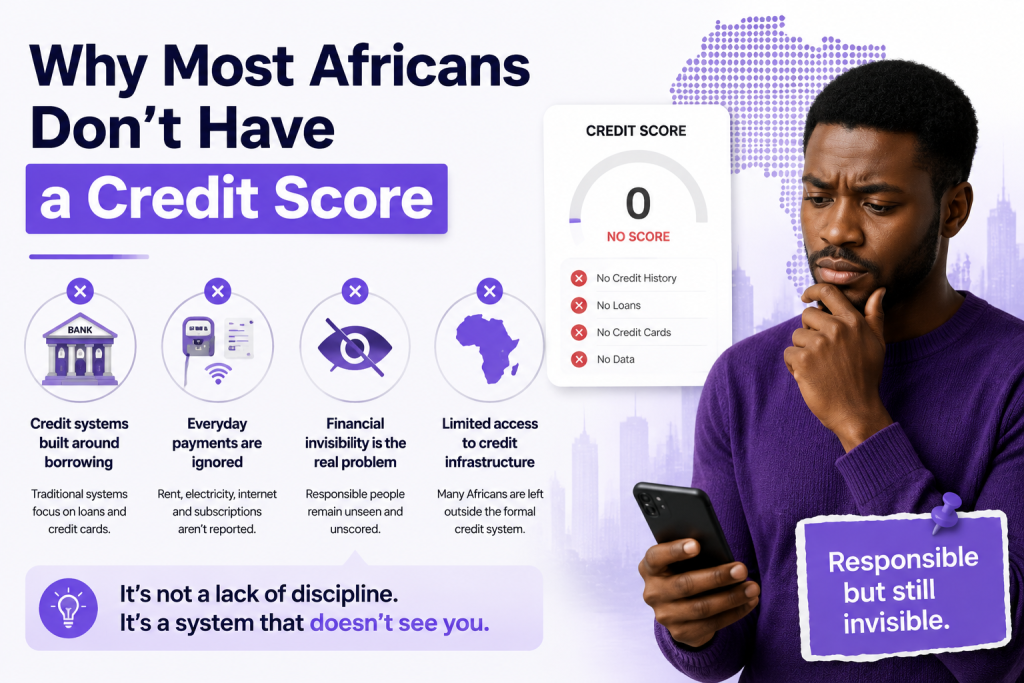
In many African countries, credit scoring systems are still heavily based on formal lending activity. This means that unless you take a loan, use a credit card, or interact with a traditional financial institution in a specific way, your financial behaviour may not be recorded.
Credit Systems Are Built Around Borrowing
Most credit scoring models were developed in markets where borrowing is common and widely tracked. These systems rely on data from banks, credit cards, and loan providers to assess a person’s creditworthiness.
In Africa, many people prefer to avoid loans or may not even have access to them. As a result, they are excluded from the system, not because they lack discipline, but because they are not participating in the type of activity the system measures.
Everyday Payments Are Often Ignored
Across Africa, people regularly pay for essential services such as rent, electricity, water, internet, and mobile data. These payments require consistency and financial discipline, yet they are rarely included in traditional credit reports.
This creates a gap where responsible financial behaviour is not recognized. A person may have years of consistent payments, but without formal credit data, they still appear as someone with no financial track record.
Financial Invisibility Is the Real Problem
The biggest issue is not poor financial behaviour. It is invisibility.
When your financial activity is not recorded, lenders have no way to assess your reliability. This makes it harder to access loans, rent properties, or take advantage of financial opportunities, even when you are fully capable of managing them.
Research from global financial institutions has shown that using alternative data, such as utility payments and digital transactions, can help expand credit access and bring more people into the financial system. This approach is especially relevant in Africa, where digital payments and everyday transactions are already part of daily life.
Do You Really Need Loans to Build Credit
For a long time, the common belief has been that you must take a loan to build a credit score. Many people have been told that the only way to prove creditworthiness is by borrowing money and paying it back on time.
While this may have worked in traditional systems, it is not the only way, especially in today’s financial environment.
Where This Belief Comes From
This idea comes from how older credit systems were designed. These systems were built to track borrowing behaviour, so they focused mainly on loans, credit cards, and other forms of debt.
Because of this, people who wanted to build a credit score had no choice but to take on some form of credit. Over time, this created the impression that borrowing was a requirement, not a choice.
Why This Approach Does Not Fit Africa Well
In many African countries, borrowing is not always the preferred or safest option.
Some people avoid loans because of:
- High interest rates
- Unpredictable income
- Fear of debt traps
- Limited access to formal credit institutions
Despite this, they still manage their finances responsibly by paying bills, handling daily expenses, and maintaining consistency over time.
The problem is that these responsible behaviours are not captured by traditional credit systems.
The Risk of Building Credit Through Loans Alone
Relying only on loans to build credit can create unnecessary pressure.
If not managed carefully, it can lead to:
- Accumulating debt just to “build a score”
- Paying interest on money you did not need
- Financial stress if income changes
This defeats the purpose of building credit healthily and sustainably.
A Better Way to Think About Credit
At its core, credit scoring is about one thing.
Trust.
Lenders want to know if you can manage money consistently and meet your financial obligations. Borrowing is just one way to show this, but it is not the only way.
Paying your rent on time, settling your electricity bills, maintaining subscriptions, and managing your daily finances responsibly all reflect the same level of discipline.
The difference is that these activities have not always been recorded in a way that contributes to your credit profile.
What This Means for You
You do not need to take loans just to build a credit score.
What you need is a system that recognizes and records the financial behaviour you already have. Once your everyday payments become visible, they can start working in your favour.
Why This Changes Everything
This shift in thinking is important because it removes the pressure to borrow unnecessarily.
Instead of taking on debt to prove responsibility, you can focus on building a credit profile based on real-life financial habits. This approach is more practical, safer, and better suited to how many people in Africa already manage their money.
Smart Ways to Build Credit Score Without Loans in Africa
If you want to understand how to build credit score without loans in Africa, the first step is to shift your focus from borrowing money to building a track record of consistent financial behaviour. The goal is not to take on debt, but to make your everyday financial activities count in a way that can be measured and recognized.
There are practical ways to do this, but they require consistency and awareness.
Pay Your Bills Consistently and On Time
Your everyday bills already reflect your financial discipline.
This includes:
- Rent
- Electricity
- Water
- Internet
- Mobile data subscriptions
Paying these bills on time shows that you can manage regular financial obligations. Over time, this creates a pattern of reliability, which is exactly what lenders look for.
The challenge is not the behaviour itself. The challenge is making sure this behaviour is recorded.
Build a Digital Financial Footprint
In today’s economy, digital transactions play a growing role in financial visibility.
Using:
- Bank transfers
- Mobile money
- Digital wallets
- Online payments
helps create a record of your financial activity. This makes it easier for systems to track your behaviour over time and build a profile around it.
People who operate completely outside digital systems often remain invisible, even if they are financially responsible.
Maintain Stable Financial Habits
Consistency matters more than volume.
You do not need to make large payments to build credibility. What matters is that your payments are regular and predictable. A steady pattern of responsible behaviour is more valuable than occasional large transactions.
This applies to both personal expenses and small business activities.
Avoid Financial Instability
While building your financial record, it is important to avoid actions that create instability.
This includes:
- Missing payments
- Frequently changing financial accounts
- Taking unnecessary debt
- Making inconsistent transactions
Stability helps build trust, and trust is the foundation of any credit system.
Use Systems That Recognize Alternative Data
This is where many people miss the opportunity.
Even if you are doing everything right, your efforts may not translate into a credit score if there is no system capturing that data. Traditional credit systems often ignore everyday financial behaviour, which is why many people remain without a credit profile.
To truly build a credit score without loans, you need a way to convert your real-life financial activity into recognized credit data.
Why This Step Alone Is Not Enough
Many people already follow these steps, yet they still do not have a credit score.
The reason is simple. Their financial behaviour is not being tracked in a way that contributes to a credit system. This creates a gap between what people do and what is recognized.
What Comes Next
Understanding these methods is crucial, but the real challenge lies in converting them into measurable credit data. Without that, even the most responsible financial habits may go unnoticed.
Why This Still Doesn’t Work for Many People
At this point, you might be thinking that you are already doing most of these things. You pay your bills on time, manage your money carefully, and avoid unnecessary debt. Yet, you still do not have a credit score or any meaningful financial record.
That is where the real problem lies.
Your Payments Are Not Being Recorded
The biggest issue is not what you are doing. It is what is not being captured.
In many African countries, systems that track credit activity are still focused on loans and formal financial products. This means that even if you consistently pay rent, electricity, or internet bills, those payments may never appear on any credit report.
So while you are financially responsible in real life, there is no official record to prove it.
There Is No System Connecting Your Financial Behavior
Your financial life is often scattered across different platforms.
You may:
- Pay rent to a landlord directly
- Buy electricity through a prepaid system
- Pay for internet or subscriptions separately
- Use different payment methods for daily expenses
All these actions show discipline, but they are not connected in a way that builds a unified financial profile. Without a system bringing this data together, it remains invisible.
Traditional Credit Systems Leave You Out
Traditional credit systems were not built with this type of financial behaviour in mind.
They expect:
- Loan repayments
- Credit card usage
- Formal lending activity
If you do not engage in these, the system has little or no data about you. This creates a situation where responsible individuals are excluded, not because they are risky, but because they do not fit into the structure the system recognizes.
You Are Judged Without Being Seen
This is the most frustrating part.
When you apply for financial opportunities, you may be evaluated based on a lack of data, rather than your actual behaviour. It is not that you have a bad credit history. It is because you have no visible credit history at all.
This can lead to:
- Loan rejections
- Limited access to financial services
- Higher requirements for approvals
- Missed opportunities
All because your financial behaviour is not being recorded.
The Real Gap You Need to Close
At this point, it becomes clear that the issue is not effort.
The issue is visibility.
You do not need to change how you manage your money. You need a way to make your existing financial behaviour count in a system that recognizes it.
How Credit Veto Africa Helps You Build Credit Without Loans
At this point, the problem is clear. You are already managing your finances responsibly, but your efforts are not being recorded in a way that builds a credit profile. This is where Credit Veto Africa becomes important.

Instead of asking you to take loans just to create a credit history, Credit Veto Africa focuses on turning your everyday financial behaviour into something that can be tracked, measured, and recognized.
Turns Your Daily Payments Into Credit Data
One of the biggest gaps in traditional systems is that everyday payments are ignored.
Credit Veto Africa helps bridge this gap by capturing payments such as
- Rent
- Electricity
- Internet
- Subscriptions
These are the same payments you already make regularly. The difference is that they are now recorded and used to build a credit profile that reflects your real financial behaviour.
Builds a credit profile from real-life activity.
Instead of relying on borrowing, Credit Veto Africa allows you to build your credit score based on how you actually live and spend.
This means:
- You do not need to take unnecessary loans
- You are not forced into debt just to be visible
- Your consistency becomes your strength
Over time, this creates a more accurate representation of your financial discipline.
Helps You Become Visible to Lenders
The main challenge many people face is not poor financial behaviour. It is a lack of visibility.
When your payments are not recorded, lenders have no data to work with. Credit Veto Africa changes this by making your financial activity visible, so you are no longer seen as someone with no history.
This increases your chances of being considered for financial opportunities when you need them.
Keeps Your Credit Building Process Structured
Building credit is not a one-time action. It requires consistency over time.
Credit Veto Africa helps you stay organized by keeping track of your recorded payments and helping you maintain a steady pattern. This makes it easier to build a credit profile without confusion or guesswork.
Why This Approach Works Better
The traditional approach forces people to take loans just to be seen. This creates unnecessary risk and does not always reflect real financial behaviour.
Credit Veto Africa offers a different path. It focuses on what you are already doing and turns it into a measurable record. This makes the process more practical, more accessible, and better suited to how people in Africa manage their money.
How Long Does It Take to Build a Credit Score?
Building a credit score without loans in Africa is possible, but it does not happen instantly. The timeline depends on how consistent your financial activity is and how quickly that activity is recorded in a system that recognizes it.
In most cases, once your payments begin to be tracked properly, you can start seeing the foundation of a credit profile within a few months. This does not mean a perfect score immediately, but it means you are no longer invisible. You now have a record that can grow over time.
What Affects How Fast Your Score Builds
The speed at which your credit score develops depends on a few key factors.
First is consistency. If your payments are regular and on time, your profile builds steadily. Irregular payments can slow down the process because they make your financial behaviour harder to assess.
Second is the type of data being captured. The more reliable and consistent your recorded payments are, the stronger your profile becomes. Payments that happen frequently, such as monthly bills, tend to build a more stable record over time.
Third is time itself. Credit systems are designed to observe patterns, not one-time actions. This means that even with the right setup, your score improves gradually as your history grows.
What “Fast” Really Means
When people think about building credit fast, they often expect immediate results. In reality, fast improvement means seeing noticeable progress within a few months, not overnight.
The advantage of building credit without loans is that you avoid unnecessary debt while still creating a financial record. This makes the process safer and more sustainable, even if it requires patience.
Conclusion
For many people across Africa, the problem has never been a lack of financial discipline. It has been a lack of recognition. You can pay your bills on time, manage your money carefully, and still remain invisible in a system that only values borrowing.
Understanding how to build credit score without loans in Africa changes that perspective. It shows that you do not need to take on debt just to prove responsibility. What you need is a way to make your everyday financial behaviour count.
The key is consistency and visibility. When your payments are tracked and recorded properly, they begin to form a credit profile that reflects who you really are financially. This opens the door to better opportunities and removes the need to rely on borrowing just to be seen.
Ready to turn your everyday payments into a real credit profile? Start building your credit the smart way today with Credit Veto Africa and make your financial behaviour count.